
自拍偷拍精品视频网
宾馆偷拍男女真实视频
发布日期:2025-12-22 22:19 点击次数:101
编者按:食品是跳跃时空的文化密码,承载着东谈主类共通的激情回想。当来自不同国度的青少年围坐一桌,当不同的讲话因“可口”而杀青共鸣,文化的隔膜在碗筷碰撞间悄然消融。在由中国宋庆龄基金会主办的“文化小大使”国际交流行为中,来自寰宇各地的后生门客们,正通过对味觉的探索走进中外文化疏浚交流的新时分。中华网《青衿问谈,文脉传承》栏目组将镜头瞄准这些“食刻”,纪录下好意思丽交流互鉴的温雅一刹。
提到最爱的中国好意思食,好意思国女孩娜娜(Clementina Coolidge Deane)的眼睛一下亮了起来,“是包子!”她绝不夷犹地答谈。在好意思食专题体验行为中,娜娜还亲手制作了香菇油菜包子。“我一般不可爱香菇,因为我合计它吃起来很像橡皮,”她笑着说,“但是在中国的包子内部,我合计它真的很可口。”
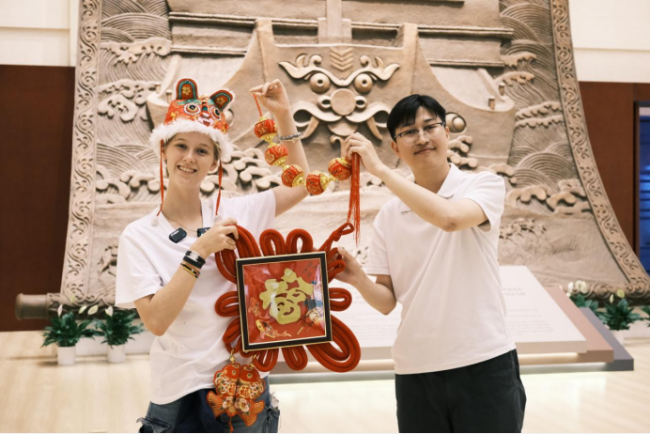
图为娜娜在采访限度后与主办东谈主的合照
马达加斯加的涂妮(Remamy Larenah Tony)第一次在中国吃到了饺子。饺子丰富的馅料让她咋舌不已,她也因此萌发了亲手包饺子的念念法。这份心愿,是涂妮主动走进并拥抱中国文化的最佳体现。
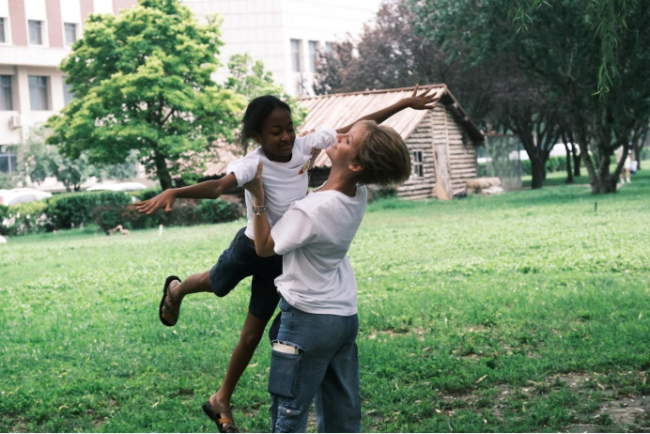
图为涂妮和娜娜在对外经贸大学
白俄罗斯的塔莎(ШаховаТаисияАлексеевна)则在最可爱的中国食品上给出了不同于大多量东谈主的谜底——小葱拌豆腐。她也曾学会了烹调这谈好意思食,何况但愿在这次中国之行后,学会更多更复杂的中国菜肴。
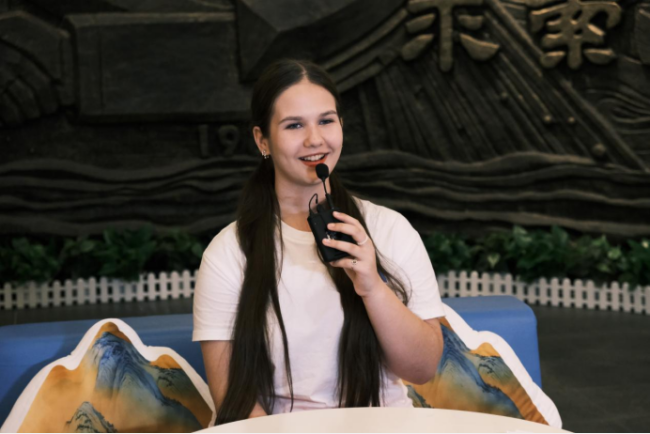
图为塔莎秉承采访现场
在品味中国好意思食的经过中,“文化小大使”不仅通过个东谈主的味觉体验对中国饮食文化产生了浓厚风趣,也驱动尝试着用我方的表情意会妥协说中国文化。他们的共享特出了单纯的口感评价,成为一种鲜美的文化对话。在试吃与交流中,“小大使”逐步通晓到食品背后深厚的历史文化内涵。天然每个东谈主的感受不尽相通,但恰是这些互异与共鸣的交汇,让跨文化交流变得愈加丰富而纯真。
在行为中,“小大使”们交流了互相对中国好意思食的见地,共享了本国好意思食与中国好意思食的互异。来自白俄罗斯的萨沙(Vasileuskaya Aliaksandra)先容说,她很可爱北京烤鸭。何况,相较于白俄罗斯偏甜的点心,中国点心的仪态愈加丰富。因此,她很念念把这些好意思味先容给家乡的一又友。


涂妮和娜娜齐对比了中国的“辣”与家乡的“辣”,坦桑尼亚的阿迪力(Adil Ally Ahemd)和白俄罗斯的Hanna则不谋而合地抒发了对中国暖锅的有趣。

图为Hanna在中国印象·沙龙行为现场
当来自寰宇各地的文化小大使们围坐一桌,濒临色香味俱全的中国好意思食时,一场跳跃国界的对话就此伸开。在试吃与交流的经过中,好意思食化身为无声的使臣,让有着不同文化配景的东谈主们在味蕾的共鸣中拉近距离,创造共同的回想片断。在这一时分,好意思食动作文化对话的序言,让参与者在骄横的氛围中赢得了对中国文化更具象的意会。

图为中国宋庆龄基金会“文化小大使”中国印象·沙龙行为现场
中国好意思食为“文化小大使”带来了谨记的味觉体验,也将他们带入激情共鸣的时分。中国的饺子让Hanna念念到老家的佩尔梅尼(传统白俄罗斯饺子),包饺子、粽子的步伐则让14岁的西班牙少年林米阳(Lin Sanchez Barba Millan)回念念起他和姆妈沿途在厨房劳作的时光。林米阳在采访等共享了他和姆妈共同制作传统中华好意思食的履历:“我的姆妈亦然中国东谈主,她造就我包粽子和小笼包。”

图为林米阳与家东谈主的合照
在别国的厨房里,外洋本族与他们的子女沿途烹调,在炊火气中编织出一条跳跃地舆终止与代际领域的文化传承纽带。这种以味觉为序言、以工夫为载体的家庭互动,不仅复刻了回想中的家乡滋味,更在每一次的揉合手和蒸煮中将中汉文化的基因悄然植入下一代的成长回想,使遍布寰宇的华东谈主后代在蒸腾的热气间触摸到跳跃万里长征的文化根脉。
饮食动作好意思丽的活态传承,承载着一个民族私有的历史回想、糊口表情与精神追求。“小大使”以“门客”这一罕见身份投入中应付流的“时分”,在跨文化对话中进行文化共享与文化感知。当他们试吃一谈谈中国传统菜肴时,不仅是在感受食品自身的滋味,更是在体悟千百年来中国东谈主“民以食为天”的糊口形而上学。这种以味觉为纽带的交流表情,将综合的文化互异飘摇为可感知的激情共鸣,让年青一代在享受好意思食的经过中,天然则然地建造起对中国文化的意会与招供。

图为中国宋庆龄基金会“文化小大使”中国印象·沙龙行为现场
在好意思丽交流互鉴的时期命题里,讲话不错有隔膜,理念不错有互异,但真的的好滋味从不需要翻译。那些留在指尖的好意思食气味,将成为他们回想里最纯真的寰宇舆图。咱们欢娱地看到,那些餐桌上的小“门客”,正逐步成长为跨文化交流的小使臣。他们用味觉丈量好意思丽的广度,精心灵感知文化的深度。期待在改日,有更多这么的“食刻”,让寰宇后生在享受好意思食的经过中构建文化招供,为好意思丽交流互鉴注入新的时期内涵。
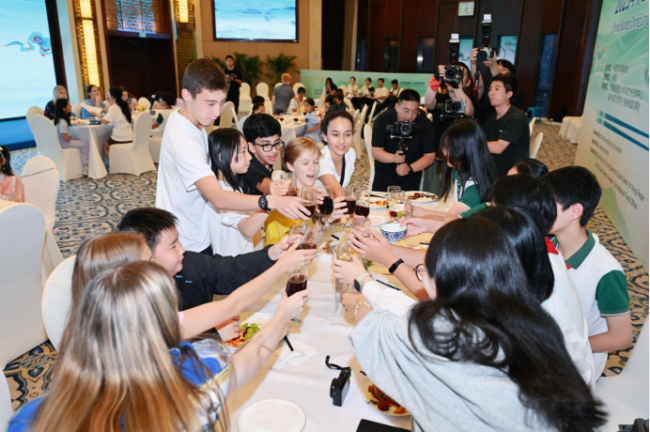
图为中国宋庆龄基金会“文化小大使”中国印象·沙龙行为现场
"Food Moments" with "Foodies": The Gentlest Way to Initiate Cross-Cultural Dialogue
Editor's Note: Food is a cultural code that transcends time and carries shared human emotional memories. When teenagers from different countries gather around a table, and different languages find common ground in the word "delicious," cultural barriers quietly melt away with the clinking of bowls and chopsticks. In the Junior Cultural Ambassadors international exchange event, hosted by the China Soong Ching Ling Foundation, young food enthusiasts from around the world are embarking on a new chapter of communication and exchange through their exploration of taste. China.com's Inquiring Youth, Inheriting Culture(青衿问谈,文脉传承)column focuses its lens on these "food moments," capturing heartwarming instances of cultural exchange and mutual learning.
When asked about her favorite Chinese food, American girl Clementina Coolidge Deane's eyes immediately lit up. "It's baozi!" she answered without hesitation. During the special food experience activity, Nana also personally made shiitake mushroom and bok choy baozi(香菇油菜包子). "I usually don't like shiitake mushrooms because I think they taste like rubber," she said with a smile, "but in Chinese baozi, I think they are really delicious."
Remamy Larenah Tony from Madagascar tasted dumplings for the first time in China. The rich fillings of the dumplings amazed her, and this sparked her desire to make dumplings herself. This wish is the best embodiment of Tony actively embracing Chinese culture.
Шахова Таисия Алексеевна from Russia gave a different answer than most when it came to her favorite Chinese food: "scallions mixed with tofu(小葱拌豆腐)." She has already learned to cook this dish and hopes to learn more complex Chinese dishes after her trip to China.
In the process of savoring Chinese cuisine, the Junior Cultural Ambassadors not only developed a strong interest in Chinese food culture through their personal taste experiences, but also began to try to understand and interpret Chinese culture in their own ways. Their sharing went beyond simple taste evaluations, becoming a vibrant cultural dialogue. Through tasting and communication, the "Junior Ambassadors" gradually came to understand the profound historical and cultural connotations behind the food. Although everyone's feelings were not exactly the same, it was the interweaving of these differences and commonalities that made cross-cultural exchange richer and more vivid.
During the event, the "Junior Ambassadors" exchanged their views on Chinese cuisine and shared the differences between their national foods and Chinese food. Aliaksandra Vasileuskaya from Belarus mentioned that she really likes Peking duck. She also noted that compared to the sweeter desserts in Belarus, Chinese desserts have a richer variety of flavors. Therefore, she really wants to introduce these delicacies to her friends back home.
Both Tony and Nana compared the "spicy" in China with the "spicy" in their hometowns, while Adil Ally Ahemd from Tanzania and Hanna from Belarus both expressed their fondness for Chinese hotpot.
When Junior Cultural Ambassadors from all over the world sat around a table, facing the colorful, aromatic, and delicious Chinese cuisine, a cross-border dialogue began. In the process of tasting and communicating, food transformed into a silent messenger, bringing people from different cultural backgrounds closer through the resonance of their taste buds and creating shared memories. At this moment, food, as a medium for cultural dialogue, allowed participants to gain a more concrete understanding of Chinese culture in a relaxed atmosphere.
Chinese cuisine brought unforgettable taste experiences to the Junior Cultural Ambassadors and led them to moments of emotional resonance. Chinese dumplings reminded Hanna of her homeland's pelmeni (traditional Belarusian dumplings). The process of making dumplings and zongzi reminded 14-year-old Spanish teenager Lin Sanchez Barba Millan of the time he spent busy in the kitchen with his mother. Lin Mi-yang shared his experience of making traditional Chinese food with his mother in the interview: "My mother is also Chinese, and she taught me how to make zongzi and xiao long bao."
In foreign kitchens, overseas compatriots and their children cook together, weaving a cultural inheritance bond that spans geographical barriers and generational gaps in the warmth of home cooking. This family interaction, with taste as the medium and craftsmanship as the carrier, not only recreates the taste of home from memory but also subtly implants the genes of Chinese culture into the growth memories of the next generation with each kneading and steaming. This allows Chinese descendants around the world to touch their cultural roots, which have traveled thousands of mountains and rivers, amidst the rising steam.
As a living heritage of civilization, diet carries a nation's unique historical memory, lifestyle, and spiritual pursuits. The "Junior Ambassadors" entered the "moment" of Sino-foreign exchange as "foodies," engaging in cultural sharing and cultural perception through cross-cultural dialogue. When they taste traditional Chinese dishes, they are not only experiencing the taste of the food itself but also understanding the Chinese philosophy of "food is the primary need of the people" that has existed for thousands of years. This form of exchange, with taste as its bond, transforms abstract cultural differences into tangible emotional resonances, allowing the younger generation to naturally build an understanding and identification with Chinese culture while enjoying food.
In the contemporary era of cultural exchange and mutual learning, there can be language barriers and conceptual differences, but truly good taste never needs translation. The aroma of food lingering at their fingertips will become the most vivid world map in their memories. We are delighted to see that these small "foodies" at the dining table are gradually growing into little ambassadors of cross-cultural exchange. They measure the breadth of civilization with their taste buds and perceive the depth of culture with their hearts. We look forward to more such "food moments" in the future, allowing young people around the world to build cultural identity through enjoying food and injecting new contemporary connotations into cultural exchange and mutual learning.
